Squirrel Secrets

Caleb Ryan
| 25-04-2026
 · Animal Team
A squirrel pauses mid-run, tail flicking, eyes scanning, then suddenly darts off in a completely different direction.
It looks random—but it isn't. Behind that quick movement is a set of survival strategies refined over time, making squirrels far more intelligent and adaptable than they appear at first glance.
They Don't Forget Where Food Is—Mostly
Squirrels are famous for burying nuts, but the idea that they constantly forget where they hid them isn't entirely accurate. In reality, they use spatial memory and environmental cues to relocate their hidden food.
They often organize storage in scattered locations, a method called “scatter hoarding.” This reduces the risk of losing everything if one spot is discovered. Interestingly, even when some caches are not retrieved, those forgotten seeds can grow into new plants, quietly shaping the environment.
The Tail Is More Than Decoration
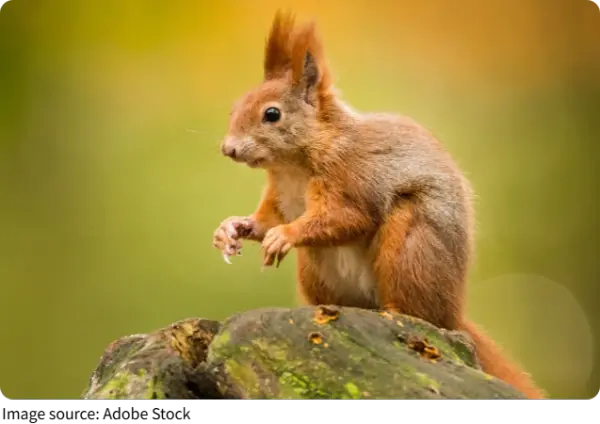
A squirrel's tail plays multiple roles beyond appearance. It acts as a balancing tool when moving across branches, especially during quick turns or jumps.
It also serves as a communication signal. Subtle tail movements can warn other squirrels of potential danger or express agitation. In colder conditions, the tail can wrap around the body like a soft cover, helping conserve warmth during rest.
They Use Deception to Protect Food
Squirrels are capable of simple strategic behavior when they feel watched. If another animal is nearby, a squirrel may pretend to bury food in one spot while actually hiding it elsewhere.
1. Fake digging
They create a hole and cover it without placing food inside.
2. Relocation
If they suspect their cache is compromised, they move it later.
3. Quick scanning
Before hiding food, they often pause and check their surroundings carefully.
This behavior shows a level of awareness that goes beyond instinct alone.
Teeth That Never Stop Growing
Like many rodents, squirrels have incisors that grow continuously. To keep them at a manageable length, they must gnaw regularly.
Common chewing choices include:
• Tree bark
• Nutshells
• Small branches
Without this constant wear, their teeth could become too long, making feeding difficult. This is why chewing is not just a habit—it's essential for survival.
They Can Jump Farther Than Expected
Despite their small size, squirrels are impressive jumpers. They can leap distances up to ten times their body length, using strong hind legs to generate force.
Their landing ability is just as remarkable. Flexible joints and sharp claws allow them to grip surfaces quickly, even on narrow branches. Combined with excellent balance, this makes them highly efficient in complex environments like tree canopies.
Vision Designed for Awareness
Squirrels have wide-set eyes, giving them a broad field of vision. This helps them detect movement from multiple directions without turning their heads frequently.
While their depth perception is strong for jumping accuracy, they rely heavily on motion detection to identify potential threats. This constant visual awareness explains their alert and cautious behavior.
They Adapt Easily to Urban Life
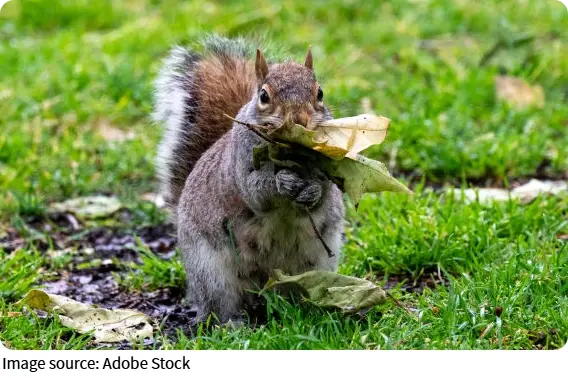
Squirrels are not limited to forests. Many species thrive in urban parks and residential areas by adjusting their habits.
1. Flexible diet
They eat seeds, fruits, and even food scraps when necessary.
2. Nesting choices
Instead of tree cavities, they may use building ledges or hidden corners.
3. Human tolerance
Over time, they become less reactive to nearby human activity.
This adaptability allows them to survive in environments that change rapidly.
Seasonal Behavior Is Subtle but Strategic
Unlike some animals, squirrels do not fully hibernate. Instead, they reduce activity during colder periods and rely on stored food.
They time their foraging carefully, often becoming more active during milder parts of the day. This balance helps conserve energy while still maintaining access to resources.
Squirrels may seem like simple, energetic creatures at a glance, but a closer look reveals a system of memory, strategy, and adaptation. Every quick movement and small decision contributes to survival in a constantly changing environment. Once you start noticing these details, even a brief encounter with a squirrel becomes far more interesting than it first appears.