Stork: 5 Facts!

Caleb Ryan
| 18-07-2026
 · Animal Team
Good day, Lykkers! A stork standing quietly in a wetland may appear almost statuesque, yet its life is filled with remarkable adaptations. Some species migrate thousands of kilometers between continents, often using rising currents of warm air to conserve energy during their journeys.
Others construct enormous nests that can be reused and expanded for many years, while their limited vocal abilities have encouraged unusual forms of communication. These five fascinating facts reveal the surprising abilities hidden behind one of nature's most recognizable long-legged birds.
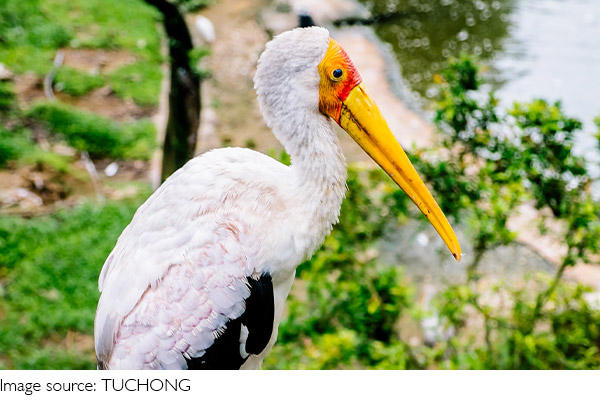
1. Some Storks Travel Between Continents Without Crossing the Open Sea
White storks are among the world's most impressive long-distance migrants. Many populations breeding in Europe travel to wintering areas in Africa, with some individuals covering thousands of kilometers during their seasonal journeys.
Their routes are strongly influenced by the way they fly. Rather than relying entirely on continuous flapping, migrating storks frequently use thermal soaring. Sun-warmed ground heats the air above it, creating rising currents called thermals. A stork can circle upward inside one of these invisible columns before gliding toward the next, conserving considerable energy along the way.
This strategy explains why major migration routes often concentrate around narrow land passages. Large bodies of water produce weaker and less predictable thermals than sun-heated land, making long sea crossings more demanding for soaring birds. Many European white storks therefore migrate through routes associated with the Strait of Gibraltar in the west or the Bosporus and surrounding eastern Mediterranean corridors.
Their migration is not simply a straight flight south. Weather, wind conditions, food availability, age, and even changing human landscapes can influence when and where individual birds travel.
2. Their Nests Can Become Enormous Structures
A stork nest is rarely a delicate little cup hidden between leaves. Large species construct substantial platforms from branches and other plant material, often placing them on tall trees, buildings, utility structures, or specially provided nesting platforms.
White storks are particularly famous for returning to established nesting locations. Each breeding season, additional material may be added to an existing structure. Over many years, repeated rebuilding can create a remarkably large and heavy platform. The nest itself can also become a miniature habitat. Smaller birds sometimes occupy spaces within or around the mass of sticks, taking advantage of the shelter created by the larger structure.
For storks, returning to a familiar nest site can be valuable because suitable elevated locations are not always abundant. A successful site provides a commanding position above the surrounding landscape while keeping eggs and chicks away from many ground-level threats.
3. Storks Have an Unusual Way of "Talking"
Unlike many familiar songbirds, storks are generally not celebrated for complex melodies. In several species, vocal ability is limited, but silence has not prevented them from developing distinctive communication. The white stork is especially known for bill-clattering.
By rapidly opening and closing its long bill, the bird creates a loud series of mechanical clicks that can carry clearly around a nesting site. During displays, a stork may throw its head backward while producing this characteristic clattering sound. The behavior is associated with communication between partners and interactions around the nest.
Storks can also produce other sounds, particularly when young, but bill-clattering has become one of their most recognizable signals. It is an excellent example of evolution finding another solution when elaborate vocal communication is limited: instead of singing a complicated song, the bird effectively turns its own bill into a percussion instrument.
4. Not Every Stork Eats the Same Kind of Food
The familiar image of a stork catching frogs tells only a small part of the story. The family Ciconiidae contains multiple species living in habitats ranging from open grasslands and wetlands to tropical forests, and their feeding strategies reflect that diversity.
Depending on the species and location, storks may consume fish, amphibians, insects, crustaceans, reptiles, small mammals, and other available prey. Some walk deliberately through shallow water while searching for movement, whereas others forage across grasslands and agricultural areas.
Their long legs provide an obvious advantage in wetlands, allowing them to move through shallow water while keeping much of the body dry. The elongated bill then becomes a highly effective tool for capturing prey.
One particularly interesting behavior occurs around environmental disturbances. Some storks take advantage of fires or agricultural activity that flush insects and small animals from hiding places. Rather than being restricted to one food source, these opportunistic hunters can respond quickly when temporary feeding opportunities appear.
5. Storks Play an Important Role in Their Ecosystems
Storks are not simply impressive travelers or symbols perched on rooftops. As predators, they participate directly in the food webs of wetlands, floodplains, grasslands, and other habitats.
By consuming a wide range of animals, they influence interactions among prey populations while also responding to changes in local environmental conditions. Because many species depend on wetlands and other productive feeding grounds, changes in stork populations can sometimes draw attention to broader habitat problems.
Their relationship with human landscapes is equally fascinating. Certain storks have adapted to nesting near settlements and feeding in agricultural environments, bringing them unusually close to people. However, dependence on modified landscapes can introduce hazards, including collisions with electrical infrastructure, habitat degradation, and exposure to unsuitable food sources.
Protecting storks therefore requires more than guarding individual nests. Healthy wetlands, safe migration corridors, appropriate nesting locations, and productive feeding habitats all contribute to their long-term survival.
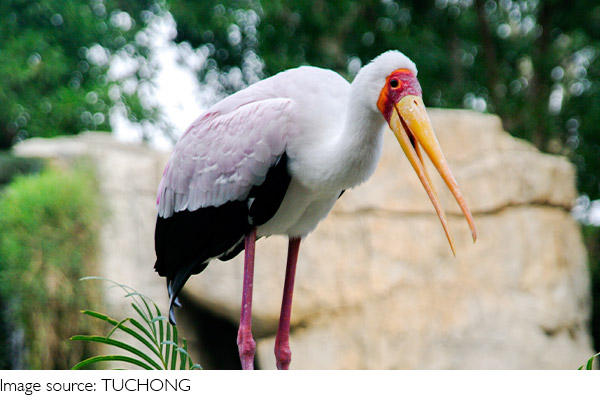
Storks are far more complex than their familiar long-legged appearance suggests. They can ride invisible air currents across continents, return to enormous nests used repeatedly over many years, communicate through rapid bill-clattering, and adjust their feeding behavior to dramatically different environments. Their lives connect wetlands, grasslands, cities, and even separate continents through migration.