Rhino Horn Mystery

Raghu Yadav
| 07-08-2026
 · Animal Team
Lykkers, when we look at a powerful rhinoceros walking across the grassland, the first thing that often catches our eyes is the impressive structure on its head. For a long time, we have called it a “horn” and imagined it as something similar to the horns of other large animals.
But what if we discover that this famous feature is actually much closer to our own fingernails? Today, let us explore the amazing science behind the rhinoceros horn and understand why this special part of the body is so important.
A Different Kind Of Horn
When we hear the word “horn,” we usually think of a strong structure connected with the skull. Many animals have horns with a hard inner support and an outer layer that protects them. However, the rhinoceros horn is very different. It does not grow from the skull as a solid extension. Instead, it is made mainly from a special protein called keratin.
Keratin is the same type of protein that forms our hair and fingernails, as well as the outer parts of many animals. This means the rhinoceros horn is not a true horn in the traditional biological sense. It is more like a huge, tightly packed group of strong fibers that grow together over time.
The Giant Natural Nail
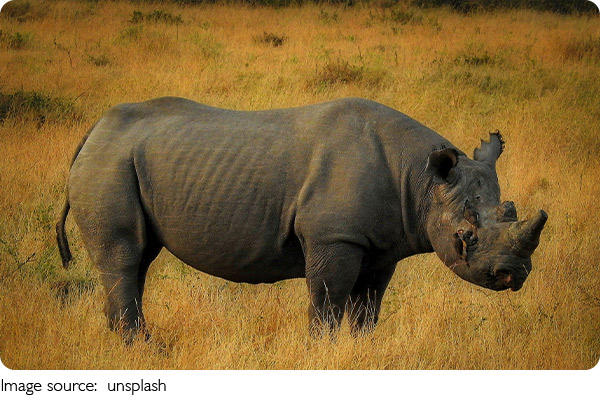
We can imagine the rhinoceros horn as a giant natural nail. Just like our fingernails grow from a special area under the skin, the rhinoceros horn develops from a growth area near the surface of the head. New keratin cells are produced there, becoming harder and stronger as they move outward.
Over many years, these layers continue building up, creating the large pointed structure we see today. The process is slow but continuous, allowing the horn to reach an impressive size. Some rhinoceroses can grow front horns that extend over one meter long when given enough time.
Why It Can Grow Again
One fascinating feature of the rhinoceros horn is its ability to grow again after damage. Because it is made from keratin instead of a hard inner structure, it can slowly recover if the main growth area remains healthy.
This is another reason why scientists compare it with our fingernails. If we break a fingernail, it can gradually grow back. The rhinoceros horn follows a similar natural process, although its size and growth speed are completely different from anything we experience.
Different Rhinoceroses, Different Shapes
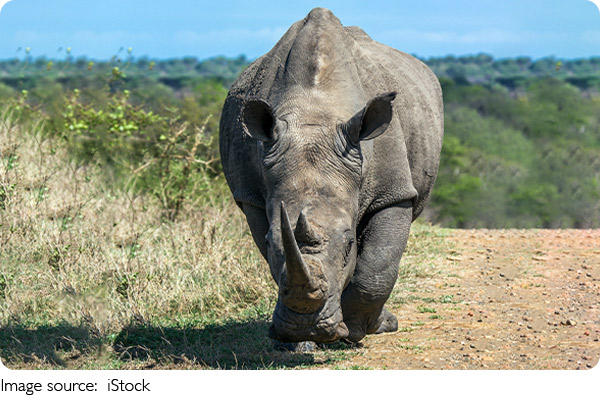
Not all rhinoceroses have the same horn design. Their shapes and numbers can vary depending on the species. Some types usually have two horns arranged one behind another, with the front one being larger. Other types have only one main horn.
These differences help us understand how each species has adapted to its own environment. The horn is not just a simple decoration. It is a special feature that has developed through a long history of survival.
A Tool For Daily Survival
For rhinoceroses, the horn is an important tool in daily life. We often imagine it as a way to defend themselves, but its role is much broader. It can help them show strength, protect themselves, communicate with others, and handle different challenges in their surroundings.
They may use the horn to move branches, search for food, create space, or protect younger members of their group. Its strong structure allows them to deal with many situations, while the sensitive growth area at the base requires careful protection.
Understanding Brings Protection
When we learn that a rhinoceros horn is actually a specialized body part made from keratin, our understanding of these animals becomes deeper. It is not a separate object that can simply be removed. It is a living part of the rhinoceros, connected to its body and important for its natural behavior.
This knowledge also helps us see why protecting rhinoceroses matters so much. The horn has often been given false value because of old beliefs and misunderstandings. In reality, it is simply a remarkable creation of nature, designed to help the animal survive.
Respecting Nature’s Design
Every rhinoceros carries a story written by millions of years of natural development. The horn on its head shows the creativity of evolution and reminds us how unique every creature can be.
When we look at these animals, we can choose to see more than just their impressive appearance. We can see a living being with special abilities, important habits, and a role in the natural world.
Lykkers, after discovering that the rhinoceros horn is closer to a giant natural nail than a traditional horn, what surprised you the most? Share your thoughts and let us continue exploring the amazing secrets of nature together.
Rhino Horn & Human Fingernail: What's The Difference? | One Wild Fact | The Travel Edit
Video by The Travel Edit