Lynx: Masters of Stealth!

Nolan O'Connor
| 21-08-2026
 · Animal Team
Hello there! Lynx are highly effective hunters because they rely on sharp senses, quiet movement, and specialized body features.
Understanding these adaptations explains how they can locate prey, approach it carefully, and make a quick attack.
Sharp Hearing Helps Locate Prey
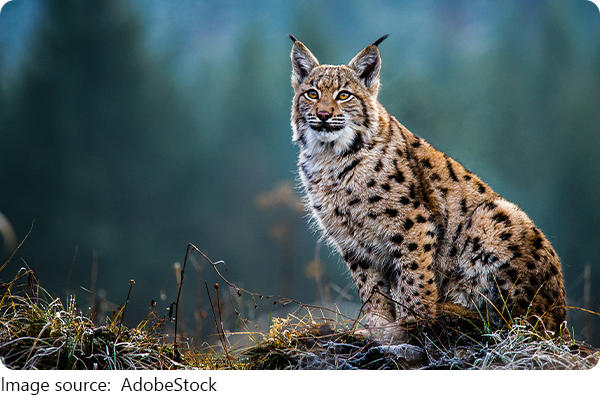
Lynx have well-developed hearing that supports hunting when visibility is limited. Their ears are relatively large, and the black tufts at the tips are a distinctive feature of the animal. Hearing gives the lynx another way to detect prey before making a close approach. This is especially useful in dense vegetation, low-light conditions, or areas where the animal cannot maintain a clear view of its target.
Lynx also have good vision and are capable of seeing in low-light conditions. Their eyes contain a reflective layer behind the retina that improves the use of available light. This combination of hearing and vision helps the animal gather information about prey without relying on one sense alone.
Large Paws Reduce Problems in Snow
The Canada lynx has unusually large, heavily furred paws. Its long legs and large feet are specialized for movement through deep snow. The broad paws distribute the animal's weight over a larger surface area, helping it remain on top of soft snow. This gives the Canada lynx an advantage when hunting snowshoe hares in snowy forests.
The adaptation also affects how the lynx approaches prey. Moving effectively through deep snow allows the cat to maintain controlled movement instead of sinking deeply with each step. This feature is particularly important because the Canada lynx depends heavily on snowshoe hares as its main prey. Its body is therefore closely adapted to the same cold, snowy environments where those hares live.
Stalking Comes Before the Attack
Lynx do not rely only on speed to catch prey. They commonly stalk prey until they are close enough to make a short pursuit and pounce. This hunting method reduces the distance that needs to be covered during the final attack. A lynx can spend time observing prey, moving carefully, and choosing an appropriate position before making a rapid movement.
Some lynx have also been observed waiting in one location for extended periods before attacking. Hunting behavior can therefore involve patience and positioning rather than continuous chasing. Most lynx hunt alone. Mothers and young can sometimes hunt together, particularly while young animals are learning hunting behavior.
Their Hunting Style Depends on the Species
"Lynx" refers to several species, so hunting details are not identical across the group. The Canada lynx is strongly associated with snowshoe hares and deep-snow habitats, while other lynx species use different habitats and prey. The Eurasian lynx, for example, is larger than the Canada lynx and can take a broader range of prey. It also has large, fur-covered paws that assist movement through snow.
This difference matters when describing lynx behavior. A feature that is especially important for the Canada lynx should not automatically be treated as equally important for every lynx species.
Quiet Movement Has a Practical Purpose
Stealthy hunting depends on several features working together rather than on one special adaptation. Strong hearing helps detect prey, good low-light vision supports visual tracking, and large paws help the Canada lynx move through snowy terrain. The hunting sequence can involve locating prey, approaching within a short distance, and then making a quick pounce. This approach suits an animal that often hunts alone and targets relatively small prey.
The Canada lynx also faces a clear limitation: its hunting success is closely connected to prey availability. When snowshoe hare numbers decline, lynx may use other small mammals and birds, but those alternatives may not fully replace their primary prey.
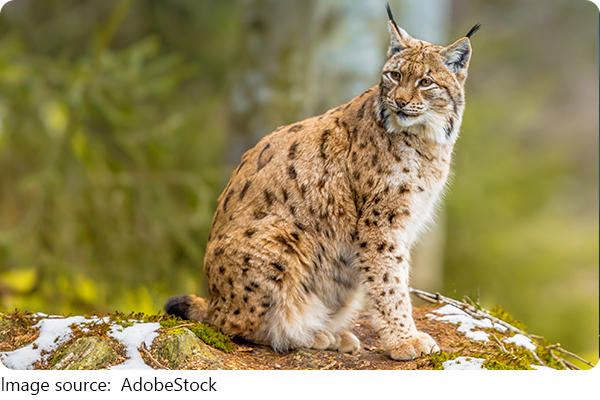
A lynx is therefore stealthy because its senses, body structure, and hunting behavior work together under specific environmental conditions. Understanding those adaptations also explains why deep snow and healthy prey habitat are important parts of the species' natural environment.